But it is also one of the most rewarding times to do a jeep safari. Here is why.
Tiger Movement Becomes More Predictable
The biggest advantage of summer is predictability.
As temperatures rise, water sources shrink. Animals including tigers rely heavily on the Ramganga River, natural streams, and whatever waterholes remain. This concentration increases the chances of seeing wildlife near these areas in a way that other seasons simply cannot match.
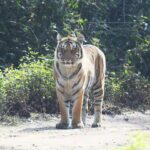
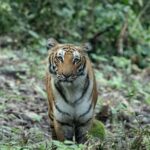
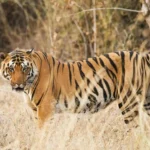
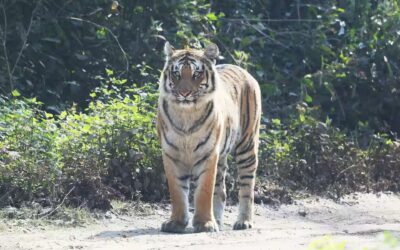
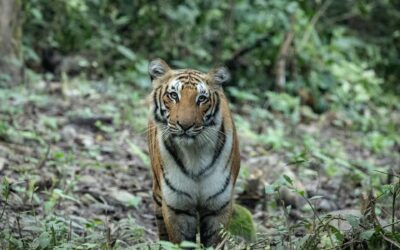
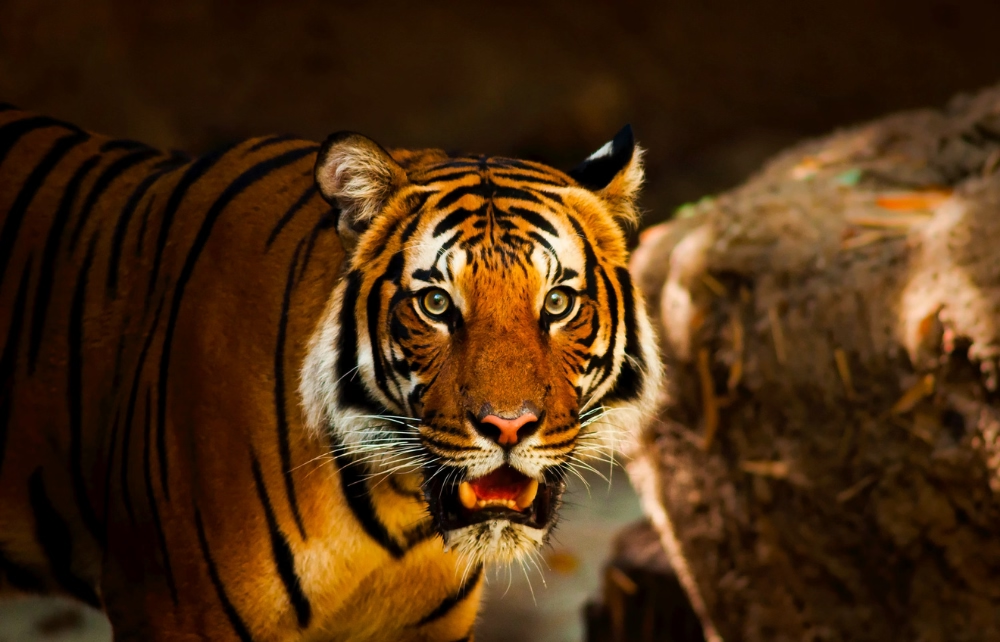
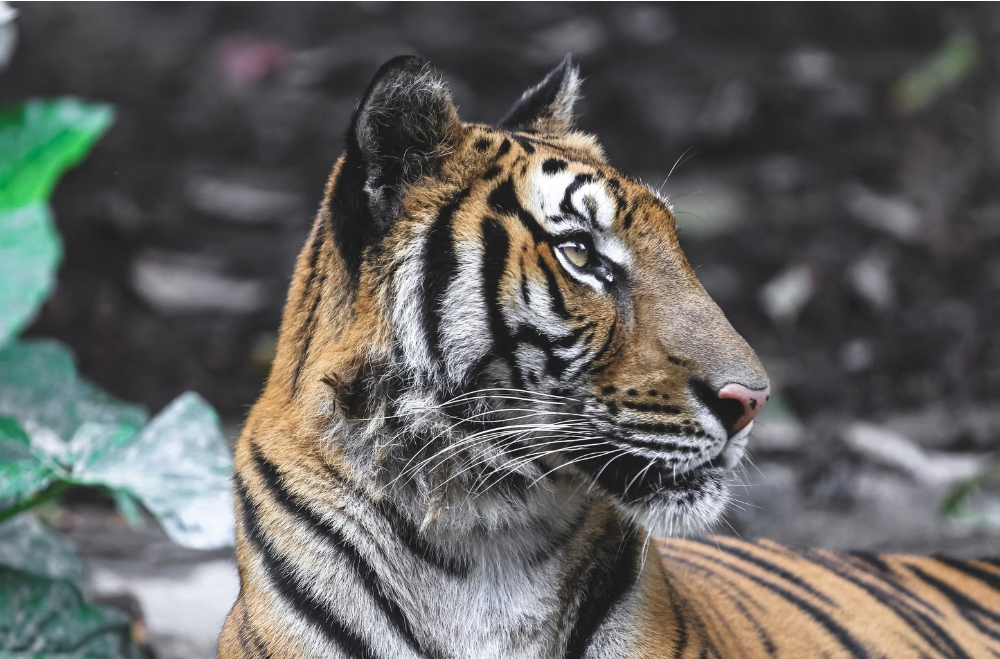
Tigers often rest in shade near water during the hottest part of the day and sometimes sit partially submerged in shallow pools to cool down. In winter they can move anywhere across the landscape. In summer they return to water.
That changes safari dynamics significantly.
Visibility in the Forest Improves
By late summer the grass is shorter, undergrowth has thinned, and trees have shed many of their leaves. Alarm calls travel farther in open terrain. Movement that would be hidden behind dense cover in other seasons becomes visible from a distance.
Even distant shapes stand out more clearly than during monsoon or early winter. For photographers this can be a genuine advantage, particularly in open grassland and riverine zones where long sightlines allow the kind of framing that thicker seasons do not permit.
Mornings and Late Afternoons Are Productive
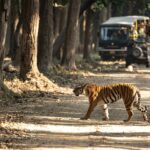
Mid-day is harsh and most animals rest through the worst of the heat. But early morning safaris can be extremely productive. Tigers move before temperatures intensify, prey animals are active, and the forest feels alive in a way that disappears once the sun is fully up.
Late afternoon drives can bring similar activity as temperatures begin to drop and animals return to water. The light in summer – golden tones against dry grass and sal forests – creates a quality of scene that photographers who have experienced it tend to return for specifically.
Fewer Casual Tourists
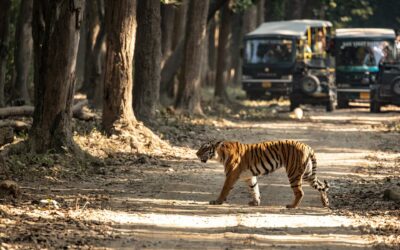
Summer heat discourages casual visitors, and the difference in atmosphere is noticeable. Fewer vehicles at sighting spots, a quieter forest, and a more focused group of travellers around you changes the feel of the experience considerably.
The forest feels more purposeful in summer. The people who show up in April and May are generally there for the wildlife, not the weather.
The Raw, Untamed Feel
Summer shows Corbett at its most rugged.
The river runs lower. The earth looks cracked and sunlit. Dust hangs in the air as jeeps move through dry tracks. It feels less like a green postcard and more like a working, breathing wilderness.
For many wildlife enthusiasts, that rawness is part of the appeal. The park is not performing for anyone in summer. It is simply functioning.
What You Need to Be Prepared For
Temperatures can cross 40°C and afternoon drives can feel genuinely intense. Hydration is critical rather than optional – carry more water than you think you will need. Light cotton clothing, a cap, and sun protection make a real difference across a two to three hour drive in open terrain.
Summer rewards preparation. The conditions ask something of you, but they give something back that comfortable seasons do not.
Final Thoughts
The best thing about a summer jeep safari in Corbett is not just better visibility or higher tiger movement near water.
It is the sense of clarity.
The forest feels stripped down to its essentials. Survival patterns become more visible. Predator and prey interactions are easier to read.
If you can handle the heat, summer offers one of the most revealing versions of Corbett you will experience.